
Conference Abstract
Non-Surgical Spinal Decompression Therapy
J.K. Park, MD. Axiom Worldwide abstract, undated (patients treated February–May 2005, Korea). Full text of the article.
Source
J.K. Park, MD. Non-Surgical Spinal Decompression Therapy. Undated English-language abstract; the patients were treated between February 2005 and May 2005 at the author’s hospital in Korea. Cited by Gan TJ, Leslie JB, and Pergolizzi JV (Special Report, Anesthesiology News and Pain Medicine News, December 2007, reference 45) as: Park JK. Nonsurgical spinal decompression therapy. Axiom Worldwide Abstract. No journal publication, DOI, or PubMed record of it was found.
The document names no institution beyond “authors hospital”. Korean medical news reports of 2005 name the neurosurgeon Park Jin-kyu (박진규), director of Park Jin-kyu Hospital (박진규병원) in Pyeongtaek, as the physician treating patients with the DRX3000 there (Dailypharm, 10 July 2005), and report that the hospital presented results in 84 patients treated from February to May 2005, with the success rates given in this abstract, at the autumn scientific meeting of the neurosurgical society (신경외과학회 추계학술대회) held at the InterContinental Hotel (Medical Times, 27 October 2005).
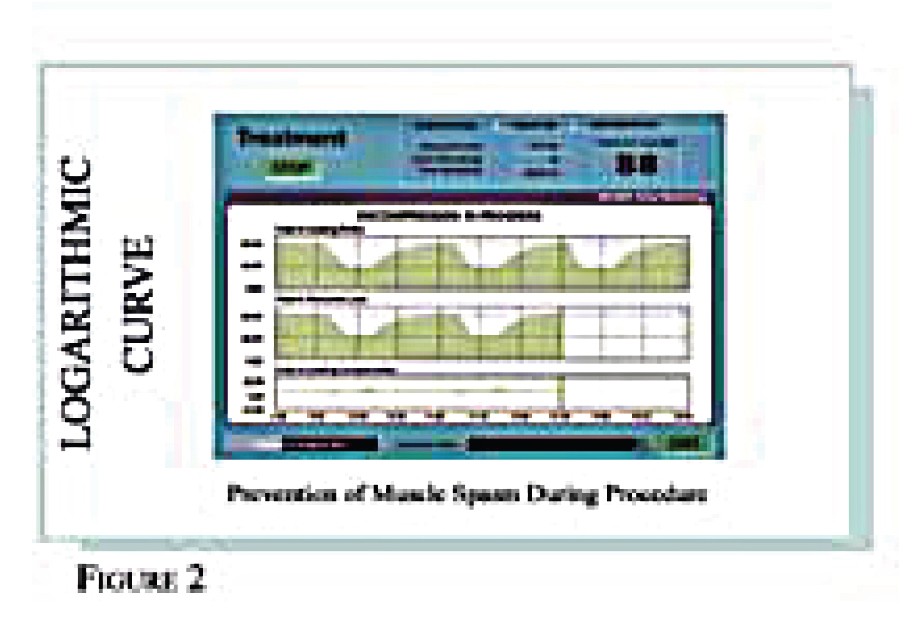
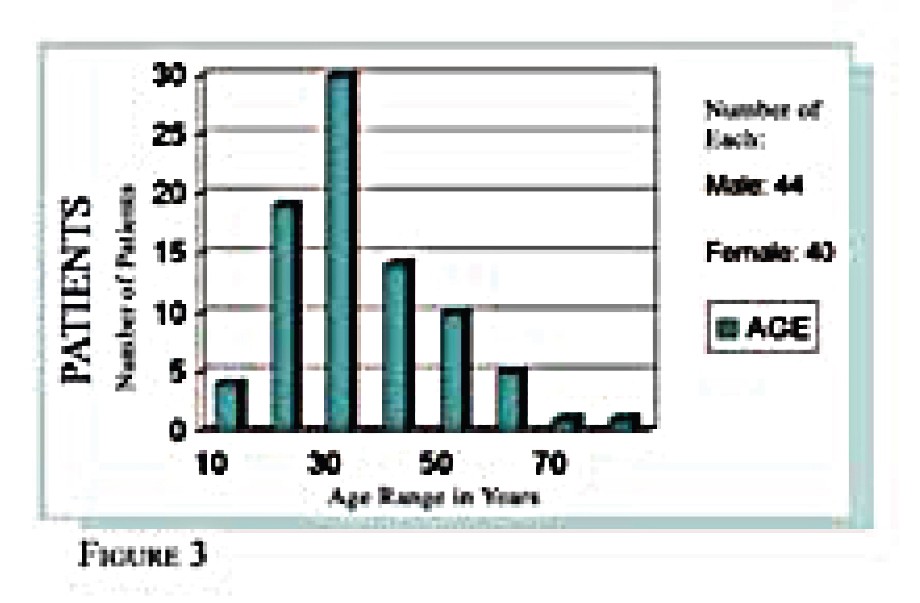
The only surviving copy of the text is a transcription published in April 2020 on the website of Excite Medical (Tampa, Florida, USA), the current manufacturer of the DRX9000. The earlier copies of the document that the company posted online between 2011 and 2018 (an Issuu document, a PDF and a page-image flipbook) are no longer available. The text below follows that transcription. Obvious character-recognition errors in it have been corrected (for example, “dinical” to “clinical”, “ODD” to “DDD,” and “*” to “™”); the wording is otherwise reproduced as published. The transcription includes Figures 2 and 3, reproduced below; it contains no Figure 1.
No copyright or licence notice survives with the text.
Reproduced as published; the English text is the only surviving version. Translations into Russian and Ukrainian are available on this site.
Abstract
Introduction: Spinal traction is widely promoted as an effective and safe treatment of degenerated and herniated lumbar discs. However, the literature on the efficacy of traction in the treatment of low back pain is conflicting. The purpose of this study was to investigate the clinical outcomes of non-surgical spinal decompression therapy (DRX3000™) for patients suffering from low back pain caused by herniated and degenerative disc disease.
Methods: 84 patients underwent non-surgical decompression therapy in authors hospital between February 2005 and May 2005. The patients, 44 male and 40 female, ranged in age from 15 years and 80 years, at the time of therapy. Diagnosis was internal disc disruption in 34 patients, herniated lumbar disc in 39 patients; degenerative disc disease in 11 patients. The treatment protocol provided for eighteen (18) sessions of non-surgical spinal decompression over a five-week course of therapy. Each session consisted of a forty-five minute treatment on the DRX3000™ system in this analysis, pain relief and clinical outcome were measured by the numerical rating scale (NRS) and graded 0 (no pain) to 10 (the worst pain I could imagine). All relevant patient data was recorded daily prior to treatment. Treatment success was defined by a reduction in pain to 5 point on the NRS scale. Generally, non-surgical spinal decompression therapy resulted in improvements in approximately 87 percent of the patients treated.
Results: Treatment was successful in 85% of 34 patients who have been diagnosed with internal disc disruption (IDD), 89% of 39 patients who have been diagnosed with herniated lumbar discs, and 82% of 11 patients who have been diagnosed with degenerative disc disease (DDD). The overall successful rate was 87%
Conclusion: Non-surgical spinal decompression of injured intervertebral disc using the DRX3000™ unit is an effective means of treatment for patients with specific discogenic syndromes.
Non-surgical spinal decompression therapy produces significant reductions in pain intensities and should be considered as a viable treatment option for patients with single or multiple level discopathies prior to surgical intervention.
Introduction
Injured discs can be treated by non-surgically decompressing the affected spinal segment, which significantly reduces intradiscal pressures, thereby permitting healing and recovery. Isolating the distraction forces to a specific functional spinal unit (FSU) of the vertebral column, allowing segment separation, creating the negative intradiscal pressure necessary to create True Nonsurgical Spinal Decompression™. Spinal decompression is a process that may enable the disc to be reoxygenated, rejuvenated, rehydrated, and renubified.
Methods
Inclusion Criteria
- Herniated and bulging lumbar discs
- Internal disc disruption
- Degenerative disc disease
- Patients available for five weeks of treatment protocol
Exclusion Criteria
- Lumbar fusion less than 6 months old
- Spondylosis
- Spondylolisthesis
- Compression fracture within one year
- Pregnancy
- Severe osteoporosis
- Metastic bone tumor
Procedure
- 45th treatment on the DRX3000™
- Followed by 15 minutes of ice and interferential therapy
- 1st week 5 days
- 2nd week 5 days
- 3rd week 3 days
- 4th week 3 days
- 5th week 2 days
- Distractive loads
- 1st day: 1/2 body weight – 10 lbs
- 2nd day: 1/2 body weight
Results
- Pain relief and clinical outcome were measured by the numerical rating scale (NRS) and graded 0 (no pain) to 10 (the worst pain one could imagine).
All relevant patient data was recorded daily prior to treatment. - Treatment success was defined by a reduction of 5 points on the NRS scale. Generally, non-surgical spinal decompression therapy resulted in improvements in approximately 87 percent of the patients treated
Conclusion
Non-surgical spinal decompression of injured intervertebral disc using the DRX3000™ unit is an effective means of treatment for patients with specific discogenic syndromes.
Non-surgical spinal decompression therapy produces significant reductions in pain intensities and should be considered as a viable treatment option for patients with single or multilevel discopathies prior to surgical intervention.